Providing Food Now Will Help Later
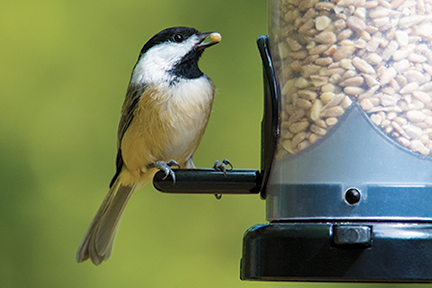
During fall and winter, chickadees, nuthatches and titmice will hide food to retrieve and eat at a later time. This behavior is called "caching." Caching helps birds survive during bad weather and when food sources are low.
These birds store hundreds of seeds a day, and each seed is placed in a different location and they remember where each one is. They can find each site accurately even a month later.
By providing an easily accessible food source, you can help your chickadees, nuthatches and titmice with their caching needs. Below is a little more detail on some of your favorite birds' caching behaviors.
|
|
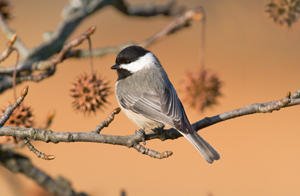
Chickadees
- Cache seeds (in the shell and out), nuts, insects and other invertebrate prey
- Food is typically cached about 100 feet (30 m) from feeders
- Cache more during the middle of the day
- May carry off several seeds at a time, but each item is stored in a separate location
- Store food in knotholes, bark, under shingles, in the ground and on the underside of small branches
|
|
|
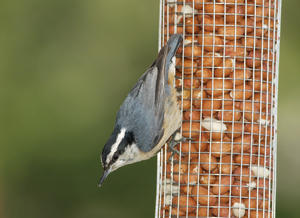
Nuthatches
- Prefer to cache hulled sunflower seeds, because they are easier and faster to cache; occasionally mealworms
- Choose heavier seeds (because they are larger or have a higher oil content)
- Food is typically cached about 45 feet (13.5 m) from feeders
- Most active caching time is early in the day
- Store food in bark crevices on large tree trunks and on the underside of branches
|
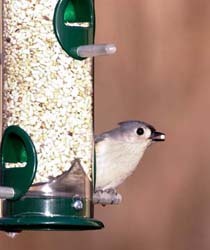 |
Titmice
- Cache sunflower, peanuts and safflower
- Food is typically cached about 130 feet (40 m) from feeders
- Cache one seed at a time and typically choose the largest seeds available
- Often remove seeds from their shell (80% of the time) before hiding them
|